

Why Narcissists “Punish” You for Saying No
Understanding the Narcissist's Need for Control, and Why Rejection Feels Like a Threat
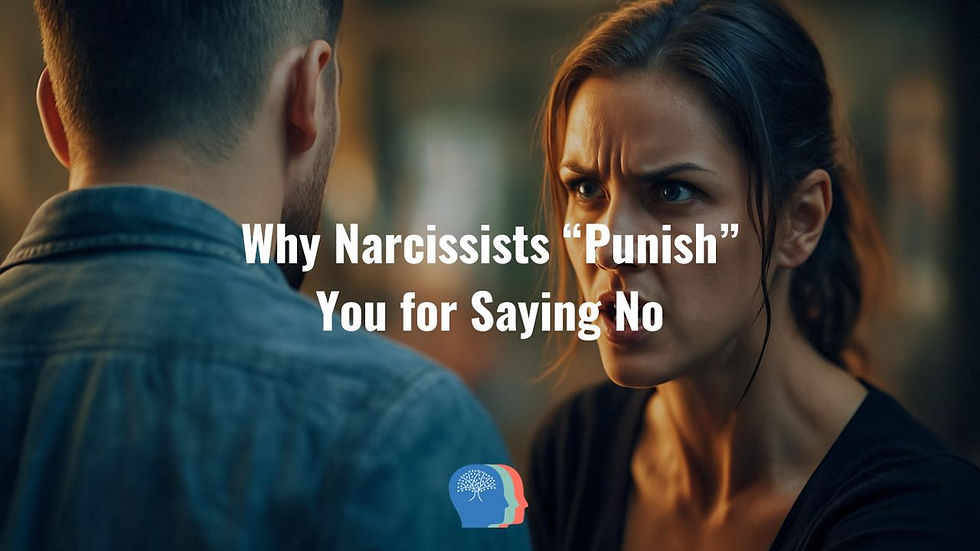
When you reject a narcissist, or don’t give them what they want, the reaction can feel wildly disproportionate. Silent treatments, smear campaigns, cold withdrawal, or sudden outbursts of rage—these aren’t just impulsive behaviors. They’re often calculated attempts to “punish” you for challenging their control.
At the core of this dynamic is the narcissist's deep need for narcissistic supply—the validation, attention, admiration, or compliance they depend on to feel secure in their identity. When you say “no,” set a boundary, or deny them the attention they crave, it doesn’t just inconvenience them. It wounds their fragile ego, often triggering what’s known as a narcissistic injury.
Why Rejection Feels So Personal to Narcissists
To a narcissist, rejection isn’t just a simple boundary—it’s a direct attack. It undermines the illusion of superiority and power they work so hard to project. In their mind, they are the center of the universe. Your “no” is seen not as your right, but as an insult.
Example 1:
You politely decline a dinner invitation from a narcissistic friend because you’re overwhelmed with work. Instead of understanding, they remain silent for days. Later, you find out they’ve told mutual friends that you’re “selfish” and “unreliable.”
What’s happening?
Your “no” threatened their sense of importance. Instead of respecting your boundary, they punished you with emotional withdrawal and a smear campaign to regain a sense of superiority.
Example 2:
You tell your narcissistic partner you need space after an argument. They explode in rage, accusing you of abandoning them, then block your number—only to unblock you a week later, acting as if nothing happened.
What’s happening?
Your boundary activated their abandonment wound. The rage and blocking were punitive—intended to guilt you and make you afraid of setting limits in the future.
Punishment is a Tool for Control
The narcissist’s need to punish isn’t always about revenge—it’s about control and power rebalancing. They want to teach you a lesson: that saying “no” has consequences.
Example 3:
You tell a narcissistic co-worker you can’t cover their shift anymore. They respond by spreading false rumors about you to others on the team, hoping to tarnish your reputation.
What’s happening?
Because you took away something they felt entitled to (your time and effort), they retaliated in a way that would put you back “in your place.”
These tactics are meant to condition your behavior—to make you think twice before asserting yourself again.
Common narcissistic punishment tactics include:
Silent treatment to make you feel invisible or anxious
Explosive anger to frighten you back into compliance
Guilt-tripping or gaslighting to shift blame back onto you
Smear campaigns to socially isolate and discredit you
Triangulation by pulling others into the conflict to make you feel ganged up on
Narcissistic Entitlement and Fragility
Narcissists often feel entitled to others’ time, emotions, and energy. When this entitlement is challenged, it threatens their carefully guarded sense of superiority. But beneath the surface lies deep insecurity and shame. Instead of facing these uncomfortable emotions, they externalize blame and lash out.
Example 4:
You ask for more emotional support in your relationship, and your narcissistic partner responds by accusing you of being “too needy” and says, “You’re lucky I even put up with you.”
What’s happening?
Rather than reflect on their lack of emotional support, they twist the narrative to make you feel like the problem. It’s a form of punishment to shut down your needs.
What to do when a Narcissist “Punishes” You for Saying No
If you’re dealing with a narcissist who punishes you for asserting your needs or saying “no,” here’s how to protect yourself:
Understand it’s not about you. Their overreaction stems from their own fragility.
Stay consistent with your boundaries. Don’t give in to avoid punishment.
Document their behavior. Especially if it escalates or affects your reputation.
Limit your emotional response. Narcissists often feed off your distress.
Seek support. Whether through therapy, community groups, or trusted friends, you don’t have to navigate this alone.
Understanding the "why" behind narcissistic punishment can be incredibly empowering. It allows you to detach emotionally, respond with clarity, and protect your peace. Narcissists may try to make you feel guilty or wrong for having boundaries, but your need for self-respect and safety is never something to apologize for. Punishment is how narcissists maintain power. Refusing to engage is how you take it back.

The information provided in this article is for informational purposes only and is not a substitute for professional advice. We are not licensed clinicians, mental health professionals, lawyers, or legal advisors. For any concerns regarding mental health or personal situations, please seek advice from a qualified professional. For more details, please read our full disclaimer.


Comments